Imagine a world where your favorite music follows you effortlessly from one room to another, creating a continuous soundtrack for your home. This dream is now a reality with multi-room audio systems, which have evolved significantly to offer unparalleled convenience and sound quality. While the term “Bluetooth” often conjures images of simple, direct connections, true multi-room systems for whole-home audio predominantly leverage Wi-Fi for superior performance, with Bluetooth serving as a valuable complementary feature for quick, localized streaming. This article will guide you through the latest and greatest multi-room Bluetooth-enabled systems of 2026, helping you understand their technology, what to look for, and our top recommendations to elevate your listening experience.
What Are Multi-Room Bluetooth Systems?
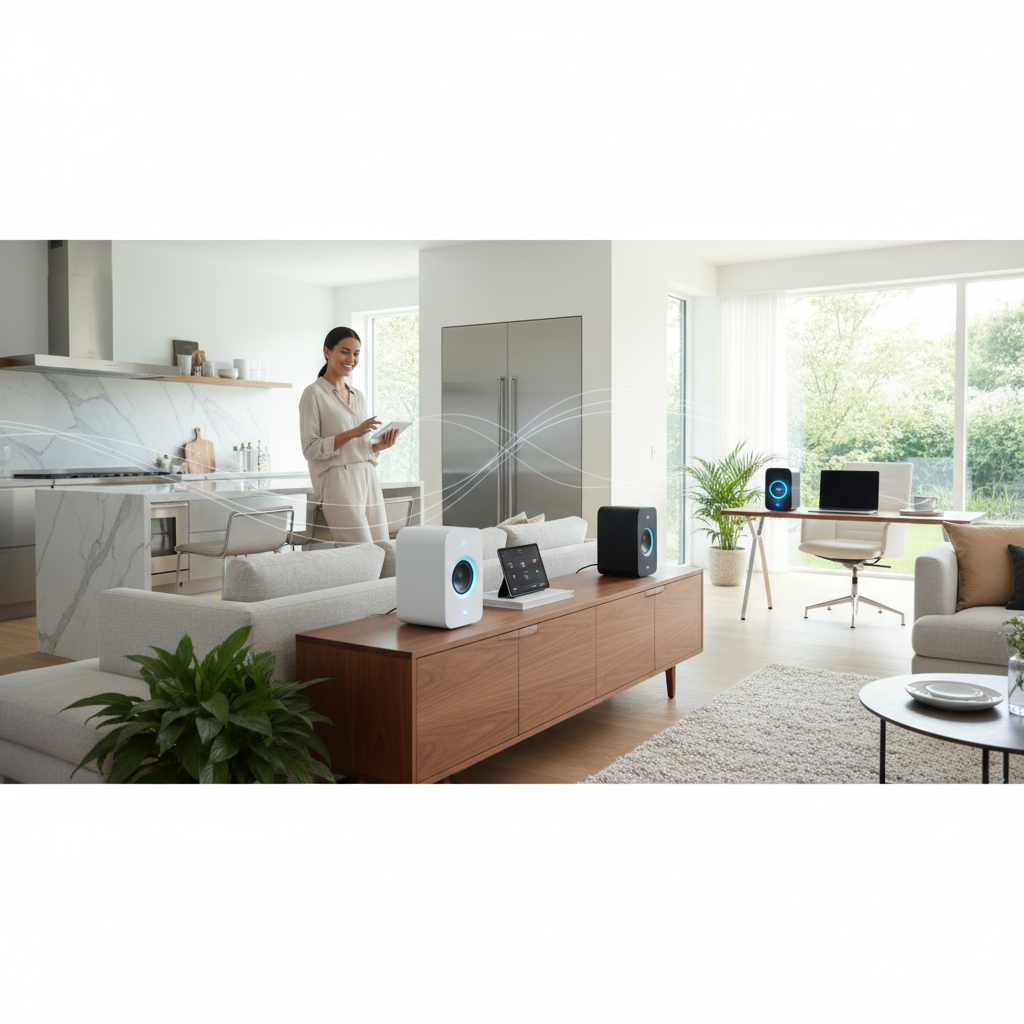
At its core, a multi-room audio system allows you to play music or other audio content across several speakers located in different rooms of your home. These systems can either synchronize playback for a unified sound experience throughout your entire space or allow you to play different audio in each zone, catering to diverse tastes simultaneously. While the convenience of “Bluetooth” is often part of the appeal, it’s crucial to understand that most sophisticated multi-room setups rely on Wi-Fi for their core functionality.
Historically, multi-room audio involved complex wired installations. However, advancements in wireless technology have transformed how we consume audio, making these systems more accessible and easier to set up than ever before. Today, multi-room audio systems are commonly used for entertaining guests, setting a mood with background music, or enjoying an immersive listening experience as you move through your daily routines.
Understanding Connectivity: Bluetooth vs. Wi-Fi for Multi-Room Audio
The distinction between Bluetooth and Wi-Fi is paramount when discussing multi-room audio. Each technology offers unique strengths and weaknesses that influence the overall user experience.
The Role of Bluetooth in Multi-Room Audio
Bluetooth has become ubiquitous for its simplicity and direct pairing capabilities. For individual speakers or small, localized setups, Bluetooth offers:
- Ease of Use: Connecting a single device like a smartphone or tablet to a Bluetooth speaker is typically straightforward and requires minimal setup.
- Portability: Many Bluetooth speakers are designed to be portable and battery-powered, making them ideal for moving from one room to another or taking outdoors.
- Cost-Effectiveness: Bluetooth technology is widely available and often integrated into more affordable speaker options.
However, for a genuine multi-room experience, Bluetooth has significant limitations:
- Limited Range: Bluetooth signals typically operate within a range of about 30 to 100 feet, which can lead to signal dropouts and interruptions in larger homes.
- Lower Audio Quality: Due to data compression and potential interference, Bluetooth generally offers lower audio fidelity compared to Wi-Fi.
- Restricted Multi-Speaker Support: Standard Bluetooth is often limited to one-to-one device pairing. While some brands offer proprietary “party modes” to link a few speakers, true synchronized whole-home audio is not its strong suit.
- Battery Drain: Bluetooth connections can consume more battery life on your source device (phone, tablet).
|
Our Picks for the Best Bluetooth speaker in 2026
As an Amazon Associate I earn from qualifying purchases.
|
||
| Num | Product | Action |
|---|---|---|
| 1 | BolaButty Bluetooth Speaker with HD Sound, Portable Wireless, IPX5 Waterproof, Up to 20H Playtime, TWS Pairing, BT5.3, for Home/Party/Outdoor/Beach, Electronic Gadgets, Birthday Gift (Black) |

|
| 2 | JBL FLIP 5, Waterproof Portable Bluetooth Speaker, Black, Small |
|
| 3 | JBL Go 4 - Ultra-Portable, Waterproof and Dustproof Bluetooth Speaker, Big JBL Pro Sound with Punchy bass, 7-Hour Built-in Battery, Made in Part with Recycled Materials (Blue) |
|
| 4 | JBL Go 3 - Portable Mini Bluetooth Speaker, big audio and punchy bass, IP67 waterproof and dustproof, 5 hours of playtime, speaker for home, outdoor and travel (Black) |
|
| 5 | Portable Bluetooth Speaker, IPX7 Waterproof Wireless Speaker with 20W Loud Stereo Sound, 15H Playtime & Beat-Synced RGB Light, Small Outdoor Speaker for Shower, Pool, Beach, Hiking and Gifts |
|
| 6 | Anker Soundcore 2 Portable Bluetooth Speaker, 12W Stereo Sound with Deep Bass, IPX7 Waterproof, 24-Hour Playtime, Built-in Mic, for Home, Outdoors & Travel |
|
| 7 | Monster S620 Bluetooth Speaker, Wireless Portable Outdoor Bluetooth Speakers, 60W True Wireless Stereo IPX8 Waterproof, Dual PairingBluetooth 5.4 Built-in Mic, Perfect for Home, Blue |
|
| 8 | Bose SoundLink Flex Bluetooth Speaker (2nd Gen) - Portable Outdoor Speaker with Hi-Fi Audio, Waterproof and Dustproof, USB-C, Up to 12 Hours Battery Life, Twilight Blue - Limited Edition Color |
|
| 9 | JBL Charge 6 - Portable Waterproof & Drop-Proof Bluetooth Speaker, Bold JBL Pro Sound with AI Sound Boost, 28Hrs of Playtime, Built-in powerbank & Comes with a Sturdy/Removable Carrying Strap (Black) |
|
| 10 | Soundcore Boom 2 By Anker, Outdoor Speaker, 80W, Subwoofer, BassUp 2.0, 24H Playtime, IPX7 Waterproof, Floatable, RGB Lights, USB-C, Custom EQ, Bluetooth 5.3, Portable for Camping and Beach - Black |
|
Why Wi-Fi Dominates True Multi-Room Audio
For seamless, high-quality multi-room audio, Wi-Fi is the preferred technology. It provides the robust backbone necessary for a cohesive whole-home sound system.
- Extended Range and Stability: Leveraging your home Wi-Fi network, these systems can cover your entire home without significant signal degradation or dropouts, often extending coverage with mesh networks or repeaters.
- Superior Audio Quality: Wi-Fi offers greater bandwidth, allowing for higher-resolution audio transmission with less compression, resulting in richer, more detailed sound.
- Seamless Synchronization: Wi-Fi-based systems excel at perfectly synchronizing audio across multiple speakers, ensuring no noticeable lag or echo between rooms.
- Independent Room Control: Control each speaker or group of speakers independently from a single app, allowing for different music and volume levels in various zones.
- Integration with Streaming Services: Wi-Fi systems integrate directly with popular streaming services like Spotify, Apple Music, Tidal, and more, eliminating the need for your phone to constantly stream the audio.
- Smart Home Ecosystems: Many Wi-Fi speakers feature voice assistants like Amazon Alexa or Google Assistant and can integrate with broader smart home setups.
- Key Technologies: Platforms like Apple AirPlay 2, Google Cast, Spotify Connect, and various proprietary multi-room technologies (e.g., Sonos, Audio Pro) operate over Wi-Fi to deliver this functionality.
The Hybrid Approach: The Best of Both Worlds
Many of the “Multi-Room Bluetooth Systems” on the market today employ a hybrid approach. They use Wi-Fi for the primary multi-room, synchronized audio experience and integrate Bluetooth for direct, convenient streaming to an individual speaker when you might not want to connect to the whole network or are outside the Wi-Fi range. This combination offers flexibility, allowing you to enjoy the robust multi-room capabilities of Wi-Fi while retaining the ease of direct Bluetooth connections.
Types of Multi-Room Bluetooth Speakers
The market offers a diverse range of multi-room speakers, each designed to cater to different needs and environments.
- By Size and Portability:
- Mini Speakers: Compact and often budget-friendly, like the Amazon Echo Dot, perfect for adding voice control and basic multi-room audio to smaller spaces.
- Stationary Home Speakers: Designed for fixed placement, these speakers prioritize sound quality and connectivity, often requiring a power outlet. Examples include the Sonos Era series or Audio Pro C-series.
- Portable Speakers (with Multi-room capability): Less common for full multi-room systems, but some models offer both battery power for portability and Wi-Fi for integration into a multi-room setup.
- By Features:
- Smart Speakers: Equipped with voice assistants (Alexa, Google Assistant, Siri) for hands-free control, smart home integration, and information retrieval.
- Hi-Res Audio Speakers: Designed for audiophiles, these speakers support high-resolution audio formats, delivering exceptional detail and clarity.
- Specific Ecosystem Speakers: Speakers deeply integrated into particular brands like Apple (HomePod) or Sonos, offering seamless operation within their respective ecosystems.
Essential Factors When Choosing a Multi-Room Bluetooth System
Selecting the right multi-room system involves considering several critical aspects to ensure it perfectly matches your lifestyle and listening preferences.
- Sound Quality: This is paramount. Look for speakers that offer a balanced sound profile with rich bass, clear mid-range frequencies, and crisp treble. Consider distortion levels at higher volumes and whether the system supports advanced audio technologies like spatial audio (e.g., Dolby Atmos).
- Connectivity & Ecosystem:
- Wi-Fi Protocols: Ensure compatibility with AirPlay 2 (for Apple users), Google Cast (for Android users), or Spotify Connect.
- Bluetooth Version: Look for Bluetooth 5.0 or higher for improved stability and range in direct connections.
- Other Inputs: Consider speakers with AUX, USB, or Ethernet ports for wired connections, which can offer even greater stability and sound quality.
- App Control: A robust, intuitive mobile application is crucial for managing your multi-room setup, grouping speakers, adjusting settings, and accessing streaming services.
- Battery Life (for portable options): If portability is a factor, check the advertised continuous playback time and charging duration.
- Durability & Water Resistance: For speakers intended for outdoor use or placement in kitchens/bathrooms, an IP rating (e.g., IPX4, IPX7) indicates resistance to splashes or submersion.
- Smart Features: Decide if voice assistants (Alexa, Google Assistant, Siri) and smart home integration are important for your daily use.
- Expandability: Choose a system that allows you to easily add more speakers over time as your needs or budget evolve.
- Budget: Multi-room systems range from affordable entry-level options to high-end audiophile setups. Define your budget early to narrow down choices.
“The true magic of multi-room audio isn’t just about playing music everywhere; it’s about making that experience effortless, intuitive, and sonically satisfying. That often means a clever blend of robust Wi-Fi for synchronization and smart Bluetooth for convenience.” – ReviewGE Admin, Lead Bluetooth Speaker Technician
Top Multi-Room Bluetooth Systems for 2026
The market for multi-room audio is constantly evolving, with new innovations and refinements emerging regularly. Here are some of the best multi-room systems available in 2026 that skillfully integrate Bluetooth capabilities.
Audio Pro C20 W
The Audio Pro C20 W is hailed as an excellent all-rounder, offering a compelling blend of sound quality and versatility that makes it a top choice for a multi-room setup.
- Pros: Delivers broad, clear, and detailed sound with tight, well-defined bass. It boasts versatile connectivity options including HDMI ARC, optical, RCA line-in, MM phono stage, and sub-out. It supports AirPlay 2, Google Cast, Spotify Connect, Tidal Connect, and Audio Pro’s own multi-room system, alongside Bluetooth 5.0 for direct streaming.
- Cons: Its size can be somewhat bulky if primarily intended as a makeshift soundbar.
Sonos Era 300
Sonos continues to be a leader in multi-room audio, and the Era 300 is a testament to their innovation, especially with its focus on spatial audio.
- Pros: Offers an immense scale of sound, excelling with spatial audio tracks enhanced by Dolby Atmos. It provides wide streaming support via Wi-Fi 6, AirPlay 2, and includes Bluetooth 5.0 for direct connections. It seamlessly integrates into the established Sonos multi-room ecosystem.
- Cons: It comes at a higher price point, and wired connections (like line-in or Ethernet) often require separate adapters. Its “cinched hourglass” design might not appeal to everyone.
Apple HomePod 2
For those deeply embedded in the Apple ecosystem, the HomePod 2 remains an unbeatable choice for multi-room audio.
- Pros: Produces natural, solid, and energetic sound, with a spacious and three-dimensional presentation, particularly with Dolby Atmos content. It integrates beautifully with Apple TV and acts as a proficient home hub with Siri voice control. Multi-room setup is simple via AirPlay 2. It features Bluetooth 5.0, though its primary audio streaming for multi-room is through AirPlay 2 over Wi-Fi.
- Cons: It is exclusively designed for Apple users and services, with limited connectivity to non-Apple devices. Siri control is restricted to Apple Music and not third-party streaming services like Spotify or Tidal.
Naim Mu-so Qb 2nd Generation
Audiophiles seeking a compact yet powerful multi-room speaker will find the Naim Mu-so Qb 2nd Generation highly appealing.
- Pros: Delivers open, detailed, and expressive sound that belies its small size. It supports a wealth of streaming options including AirPlay 2, Chromecast, Spotify Connect, Tidal, Roon Ready, and Bluetooth (SBC, AAC codecs). It’s built with premium components for high-resolution audio.
- Cons: This is a premium-priced option. It does not support aptX Bluetooth.
Amazon Echo Dot (5th Generation)
For those on a budget or already invested in the Alexa ecosystem, the Echo Dot 5th Gen offers an accessible entry into multi-room audio.
- Pros: Provides surprisingly expansive and weighty sound for its compact size. Features excellent Alexa integration for voice control and smart home capabilities. It’s highly affordable and can be grouped with other Echo devices for an effective multi-room setup over Wi-Fi. It includes Bluetooth for direct device pairing.
- Cons: Sound quality can distort at the higher volume ranges, and it lacks physical inputs for external audio sources.
Pricing Tiers for Multi-Room Bluetooth Systems
The cost of multi-room Bluetooth-enabled systems varies widely, reflecting differences in brand, sound quality, features, and overall ecosystem.
- Budget-Friendly (Under $100): This category often includes smart speakers like the Amazon Echo Dot (5th Gen) or smaller, individual Bluetooth speakers that can sometimes be grouped using proprietary apps or certain operating system features. These are great for basic multi-room needs and smart home integration.
- Mid-Range ($100 – $400): This segment features popular choices like the Apple HomePod 2, Sonos Era 100/300, and Audio Pro C5/C10 MKII. These speakers offer a significant step up in sound quality, more robust multi-room capabilities via Wi-Fi, and a broader range of smart features.
- Premium (Above $400): For audiophiles and those seeking uncompromising sound quality and luxurious design, this tier includes systems like the Naim Mu-so Qb 2nd Generation or higher-end Sonos and Bowers & Wilkins models. These systems often support hi-res audio, advanced audio tuning, and superior build materials.
Setting Up Your Multi-Room Bluetooth System
Setting up a modern multi-room system is generally straightforward, largely thanks to intuitive companion apps.
- Power On: Plug in and power on all your speakers.
- Download the App: Install the manufacturer’s dedicated app (e.g., Sonos app, Audio Pro app, Alexa app) on your smartphone or tablet.
- Connect to Wi-Fi: Follow the in-app instructions to connect each speaker to your home Wi-Fi network. This is the critical step for multi-room functionality.
- Group Speakers: Use the app to create groups of speakers for synchronized playback or assign them to individual rooms for independent control.
- Start Streaming: Select your desired music source within the app and begin playing audio across your chosen zones.
For optimal sound, consider speaker placement – experiment with different locations to find what sounds best in each room, avoiding corners for bass-heavy speakers unless desired. Ensure your Wi-Fi network is robust enough to handle multiple streaming devices simultaneously for a seamless experience.
Conclusion
The landscape of multi-room audio systems in 2026 offers incredible opportunities to fill your home with vibrant, synchronized sound. While the term “Bluetooth” often initiates the search, it’s the sophisticated integration of Wi-Fi technology that truly powers these seamless whole-home audio experiences, with Bluetooth providing convenient direct connections when needed. From the rich spatial audio of the Sonos Era 300 to the versatile connectivity of the Audio Pro C20 W and the budget-friendly smarts of the Amazon Echo Dot, there’s a system tailored for every home and listener.
When choosing, prioritize sound quality, evaluate the connectivity options (especially Wi-Fi protocols like AirPlay 2 and Google Cast), and consider which ecosystem aligns best with your existing devices. With the right multi-room system, you’re not just buying speakers; you’re investing in an immersive, effortless audio lifestyle that transforms every corner of your home. Which room will be your next listening sanctuary?
Frequently Asked Questions
Can you mix and match different brands for a multi-room Bluetooth system?
Generally, true multi-room synchronization works best within a single brand’s ecosystem (e.g., Sonos, Audio Pro) or universal Wi-Fi-based protocols like AirPlay 2 or Google Cast, which allow compatible speakers from different brands to be grouped. Standard Bluetooth typically does not support multi-brand, synchronized multi-room playback.
Do multi-room Bluetooth systems require Wi-Fi?
Most effective multi-room audio systems, even those with Bluetooth capabilities, primarily rely on your home’s Wi-Fi network for stable, high-quality, and synchronized playback across multiple speakers. Bluetooth is usually included for convenient direct streaming to a single speaker.
What is the best way to control a multi-room system?
Dedicated mobile applications provided by the speaker manufacturer are typically the best way to control a multi-room system, offering comprehensive control over grouping, volume, playback, and settings. Voice assistants like Alexa, Google Assistant, and Siri also provide hands-free control for compatible systems.
How many speakers can I connect in a multi-room system?
The number of speakers you can connect depends on the specific system and brand. High-end Wi-Fi-based systems from brands like Sonos or Audio Pro can often support a large number of speakers (dozens) within a single home network, allowing for extensive whole-home coverage.
Is a multi-room audio system worth the investment?
If you enjoy having music consistently throughout your home, hosting gatherings, or desire the convenience of controlling audio in different zones from a single device, a multi-room audio system is definitely a worthwhile investment. The seamless experience greatly enhances daily living and entertainment.