Choosing the right Bluetooth speaker often comes down to more than just brand and battery life; it hinges on understanding the fundamental ways sound is delivered. For many, the debate between mono and stereo sound modes is crucial for achieving the perfect audio experience. Whether you’re a casual listener or an audiophile, grasping the differences between mono and stereo isn’t just technical jargon—it’s key to unlocking your speaker’s full potential. This guide will demystify these sound modes, helping you navigate their complexities and make an informed decision tailored to your listening needs.
Understanding Bluetooth Speakers and Audio Modes
Before diving into the specifics of mono and stereo, let’s briefly define what a Bluetooth speaker is and how it functions. A Bluetooth speaker is a wireless audio device that connects to your smartphone, tablet, or computer via Bluetooth technology, playing audio without the need for cables. These portable devices have revolutionized how we consume media, offering convenience and decent sound quality on the go. Over the years, advancements in Bluetooth technology and speaker design have paved the way for more sophisticated sound delivery, including the ability to choose between distinct mono and stereo audio modes. From personal listening to powering a party, Bluetooth speakers have found a myriad of applications, making the choice of audio mode increasingly relevant.
What is Mono Sound?
|
Our Picks for the Best Bluetooth speaker in 2026
As an Amazon Associate I earn from qualifying purchases.
|
||
| Num | Product | Action |
|---|---|---|
| 1 | JBL Go 3 - Portable Mini Bluetooth Speaker, big audio and punchy bass, IP67 waterproof and dustproof, 5 hours of playtime, speaker for home, outdoor and travel (Black) |

|
| 2 | Anker Soundcore 2 Portable Bluetooth Speaker, 12W Stereo Sound with Deep Bass, IPX7 Waterproof, 24-Hour Playtime, Built-in Mic, for Home, Outdoors & Travel |
|
| 3 | BolaButty Bluetooth Speaker with HD Sound, Portable Wireless, IPX5 Waterproof, Up to 20H Playtime, TWS Pairing, BT5.3, for Home/Party/Outdoor/Beach, Electronic Gadgets, Birthday Gift (Black) |
|
| 4 | Bose SoundLink Flex Bluetooth Speaker (2nd Gen) - Portable Outdoor Speaker with Hi-Fi Audio, Waterproof and Dustproof, USB-C, Up to 12 Hours Battery Life, Twilight Blue - Limited Edition Color |
|
| 5 | JBL Go 4 - Ultra-Portable, Waterproof and Dustproof Bluetooth Speaker, Big JBL Pro Sound with Punchy bass, 7-Hour Built-in Battery, Made in Part with Recycled Materials (Blue) |
|
| 6 | Soundcore Boom 2 By Anker, Outdoor Speaker, 80W, Subwoofer, BassUp 2.0, 24H Playtime, IPX7 Waterproof, Floatable, RGB Lights, USB-C, Custom EQ, Bluetooth 5.3, Portable for Camping and Beach - Black |
|
| 7 | Monster S620 Bluetooth Speaker, Wireless Portable Outdoor Bluetooth Speakers, 60W True Wireless Stereo IPX8 Waterproof, Dual PairingBluetooth 5.4 Built-in Mic, Perfect for Home, Blue |
|
| 8 | JBL Charge 6 - Portable Waterproof & Drop-Proof Bluetooth Speaker, Bold JBL Pro Sound with AI Sound Boost, 28Hrs of Playtime, Built-in powerbank & Comes with a Sturdy/Removable Carrying Strap (Black) |
|
| 9 | Portable Bluetooth Speaker, IPX7 Waterproof Wireless Speaker with 20W Loud Stereo Sound, 15H Playtime & Beat-Synced RGB Light, Small Outdoor Speaker for Shower, Pool, Beach, Hiking and Gifts |
|
| 10 | JBL FLIP 5, Waterproof Portable Bluetooth Speaker, Black, Small |
|
Mono, short for monophonic, refers to audio that is recorded and played back using a single audio channel. This means all sound signals—vocals, instruments, effects—are combined into one unified stream, which is then sent to one or more speakers. When a Bluetooth speaker operates in mono mode, it essentially replicates this single channel of sound, regardless of how many drivers it has. If you have a single mono speaker, all the sound comes from that one point. Even if you pair multiple mono speakers in a “Party Mode,” each speaker will output the exact same, combined mono signal, ensuring consistent volume and clarity across an entire space without any directional differentiation. This approach simplifies the audio experience, focusing on direct sound delivery rather than spatial immersion.
What is Stereo Sound?
Stereo, or stereophonic sound, utilizes two independent audio channels: a left channel and a right channel. This allows for distinct sounds to be played through different channels, creating a sense of direction, width, and depth in the audio landscape. In the context of Bluetooth speakers, true stereo sound is typically achieved in one of two ways:
- Single Stereo Speaker: Some larger or more advanced Bluetooth speakers house multiple drivers within a single enclosure, configured to deliver separate left and right channels.
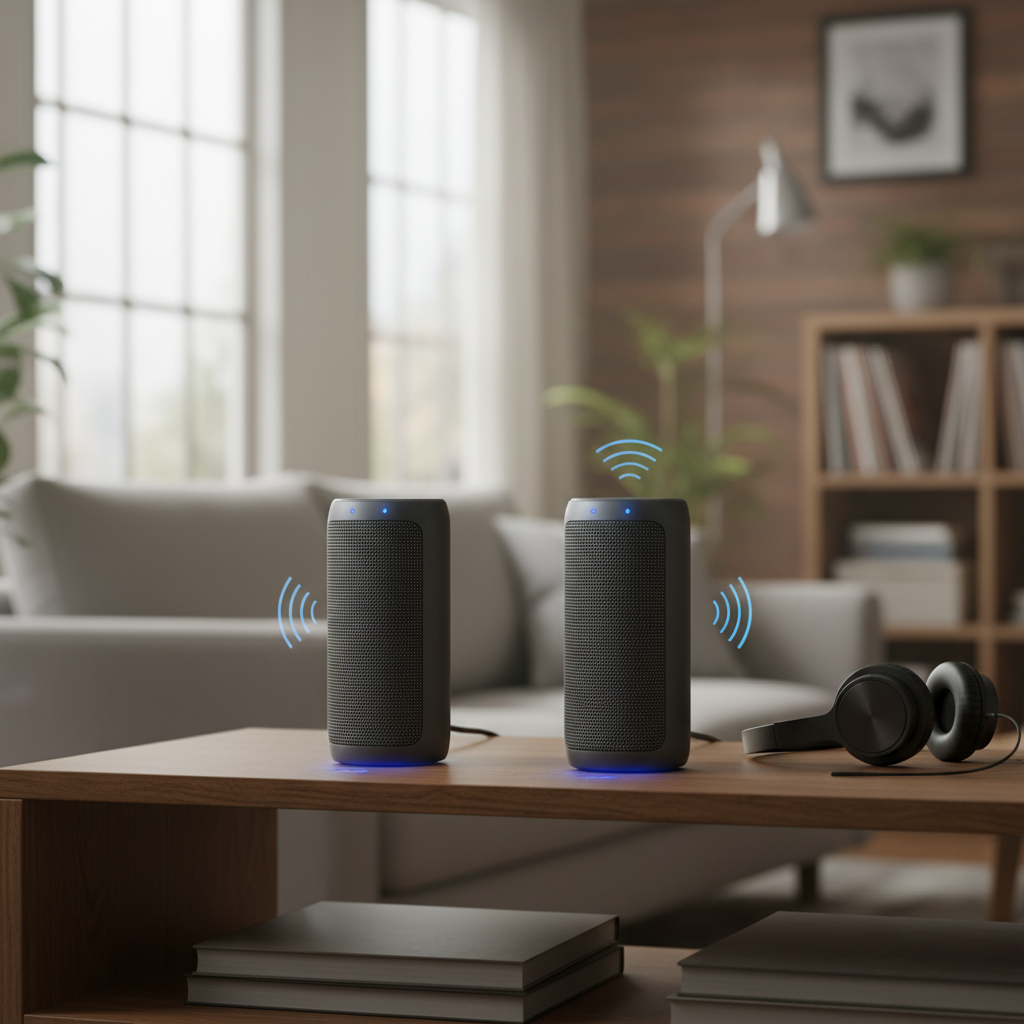
- True Wireless Stereo (TWS) Pairing: More commonly, two individual Bluetooth speakers are wirelessly paired together. One speaker handles the left audio channel, and the other handles the right, effectively mimicking a traditional stereo setup. This method provides a much wider and more immersive soundstage.
Stereo sound aims to replicate how humans naturally perceive sound in a real-world environment, where sounds originate from various directions. This separation of channels allows instruments and vocals to be distinctly placed within an audible space, enhancing realism and engagement.
Mono vs. Stereo Bluetooth Speakers: A Detailed Comparison
The choice between mono and stereo fundamentally alters your listening experience. Here’s a breakdown of their key differences:
| Feature | Mono Mode | Stereo Mode |
|---|---|---|
| Audio Channels | Single, combined channel | Two independent channels (Left & Right) |
| Soundstage | Flat, centralized, no spatial separation | Wide, expansive, distinct placement of sounds |
| Immersion | Less immersive, direct | Highly immersive, three-dimensional audio experience |
| Clarity | Often perceived as clearer for voice-centric content | Excellent for music with layered instruments, potential for complexity |
| Bass Response | Can be strong, but lacks directional depth | Strong, with potential for more nuanced, directional bass |
| Best Use Cases | Podcasts, audiobooks, background music, public announcements | Music, movies, gaming, critical listening, home theater replacement |
| Setup Complexity | Simple (single speaker or multiple playing same signal) | More complex (requires two speakers for TWS or a dedicated stereo unit) |
| Listener Position | Sound consistent regardless of listener position | Optimal sound requires listener to be positioned centrally |
| Cost (General) | Often lower for a single good mono speaker | Potentially higher, especially for TWS setups or premium stereo speakers |
| File Size | Smaller file sizes (if recorded in mono) | Larger file sizes (if recorded in stereo) |
When to Choose Which Mode
Deciding between mono and stereo isn’t about one being inherently “better,” but rather which mode best suits your specific needs and listening environment.
Opt for Mono if…
- You primarily listen to voice-centric content: Podcasts, audiobooks, news, or spoken word benefits from mono’s focused clarity. Since there are no spatial cues to miss, a mono speaker delivers the message directly and effectively.
- You need maximum portability and simplicity: Many compact Bluetooth speakers are designed to be mono for ease of use and space-saving. A single mono speaker is ideal for tossing in a bag and playing anywhere without worrying about speaker placement or pairing a second unit.
- You’re on a budget: Generally, a high-quality mono speaker can be more affordable than a stereo setup or a premium stereo speaker with multiple drivers.
- You’re listening from a distance or in a large, open area: The nuanced separation of stereo sound is often lost when you’re far away from the speakers or in an acoustically challenging environment. In such cases, a powerful mono signal ensures everyone hears the full sound spectrum.
- You want consistent background music: For parties or gatherings where sound needs to fill a wide area uniformly without specific sweet spots, multiple mono speakers (or one powerful mono speaker) provide a consistent audio backdrop.
Go for Stereo if…
- Music, movies, or gaming is a priority: These media types are often recorded in stereo to create an immersive experience. Stereo mode allows you to hear the subtle placement of instruments, character voices, and environmental effects, significantly enhancing enjoyment.
- You desire immersive, lifelike sound: For critical listening, stereo mode creates a “soundstage” where you can almost visualize where each sound element is positioned in space, leading to a much richer and engaging experience.
- You appreciate soundstage and instrument separation: If you love to pick out individual guitar riffs, layered vocals, or intricate drum patterns, stereo sound provides the separation needed to discern these details clearly.
- You’re listening in a more controlled environment or up close: In a smaller room, or when you’re seated directly in front of a stereo setup, the left-right separation becomes very noticeable and impactful. This allows you to fully appreciate the depth and dimension that stereo offers.
- You’re willing to invest in a True Wireless Stereo (TWS) setup: Pairing two compatible mono speakers into a TWS system is often the most effective way to achieve a genuine stereo experience with portable Bluetooth speakers.
Factors to Consider Beyond Mono vs. Stereo
While the choice between mono and stereo is significant, it’s part of a larger picture when selecting a Bluetooth speaker. Other crucial factors will influence your overall satisfaction:
Audio Quality
Beyond the mode, the inherent sound quality of a speaker matters. Look into aspects like frequency response (how well it handles bass, mids, and treble), driver size and type, and total harmonic distortion. A well-engineered mono speaker might sound better than a poorly designed stereo one.
Battery Life
For portable Bluetooth speakers, battery life is paramount. Consider how long the speaker can play on a single charge and its recharge time. Note that running two speakers in a TWS stereo setup might consume battery faster than a single speaker in mono mode.
Connectivity
While Bluetooth is the primary connection, check the version (Bluetooth 5.0 and above offer better range and stability), and look for additional input options like AUX ports for wired connections or USB-C for modern charging. Some speakers also offer multi-point connectivity, allowing two devices to connect simultaneously.
Durability and Water Resistance
If you plan to use your speaker outdoors or near water, an IP (Ingress Protection) rating is essential. IPX7, for example, means the speaker can be submerged in water up to 1 meter for 30 minutes, making it highly water-resistant. The build materials also contribute to overall durability.
Additional Features
Modern Bluetooth speakers come with a host of extra functionalities. These can include:
- Smart Assistant Integration: Built-in Google Assistant or Alexa for voice commands.
- Multi-Speaker Pairing: Beyond TWS stereo, some offer “Party Mode” to connect many speakers for widespread mono sound.
- Power Bank Functionality: Some speakers can charge your other devices.
“The true magic of sound lies not just in its fidelity, but in how it connects with the listener. Whether mono or stereo, the ‘best’ mode is ultimately the one that brings your audio to life in your specific environment and for your particular purpose.” – Dr. Evelyn Reed, Lead Acoustical Engineer, Audio Innovations Lab
Conclusion
The debate between mono and stereo isn’t about a universal winner, but rather understanding which audio delivery method best serves your personal listening preferences and environment. Mono mode shines in its simplicity, clarity for spoken word, and consistent sound projection, making it ideal for background music, podcasts, or filling large spaces without critical listening. Conversely, stereo mode elevates the musical, cinematic, and gaming experience with its immersive soundstage, spatial depth, and detailed instrument separation.
For critical music listeners, filmmakers, and gamers, the rich, three-dimensional audio landscape of stereo is often indispensable, especially when utilizing a True Wireless Stereo setup with two speakers. However, for casual listening, portability, or simply ensuring clear audio at a distance, a powerful mono speaker can be remarkably effective and often more practical. By weighing the pros and cons against your primary use cases and desired audio quality, you can confidently choose the Bluetooth speaker and mode that perfectly complements your sonic journey. What kind of sound adventure will you embark on next?
Frequently Asked Questions
Can a mono speaker play stereo content?
Yes, a mono speaker can play stereo content. When a stereo audio signal is sent to a mono speaker, the speaker’s internal circuitry sums the left and right channels into a single, combined mono signal. While you’ll hear all the audio, you will lose the spatial separation and immersive soundstage that stereo playback offers.
Can two mono Bluetooth speakers create stereo sound?
Absolutely. Many modern Bluetooth speakers feature True Wireless Stereo (TWS) technology, which allows you to pair two identical mono speakers. When paired in TWS mode, one speaker will play the left audio channel, and the other will play the right, effectively creating a true stereo sound experience.
Is stereo always better than mono for Bluetooth speakers?
Not necessarily. While stereo sound generally offers a more immersive and detailed audio experience, mono can be superior in certain situations. For podcasts, audiobooks, or playing music in a very large, open space where the stereo effect would be lost, mono provides consistent clarity and coverage. The “better” mode depends entirely on your content and listening environment.
How do I switch between mono and stereo on my Bluetooth speaker?
The ability to switch between mono and stereo modes depends on your specific Bluetooth speaker model and its accompanying app. For TWS setups, the pairing process typically offers a choice between stereo and party (mono) modes. Some advanced speakers with multiple drivers might have a dedicated button or an option within their companion app to toggle between sound profiles, though this is less common than TWS switching.