Does your music sound thin, lacking that satisfying low-end punch? Many affordable speakers struggle to deliver rich, deep bass, leaving your favorite tracks feeling flat and unengaging. The good news is, you don’t always need to break the bank on new equipment. With a bit of ingenuity and some practical DIY techniques, you can significantly enhance the bass response of your existing cheap speakers and rediscover the full depth of your audio experience.
What is Bass and Why Do Cheap Speakers Lack It?
Bass refers to the low-frequency sounds in audio, typically ranging from 20 Hz to 250 Hz, which provide the foundation and warmth to music. It’s the thumping kick drum, the rumbling bassline, and the deep resonance that makes audio feel full and impactful. Unfortunately, many inexpensive speakers inherently struggle with bass reproduction.
This deficiency often stems from several factors, including smaller driver sizes that physically cannot move enough air to produce deep low frequencies, inadequate cabinet designs that fail to properly resonate or damp unwanted vibrations, and limited power handling capabilities that lead to distortion when attempting to boost bass. Overcoming these limitations requires a thoughtful approach that balances physics, acoustics, and practical modifications.
Understanding Speaker Placement for Bass Enhancement
One of the most effective and often overlooked methods to boost bass without spending a dime is optimizing speaker placement. The acoustics of your listening environment play a crucial role in how you perceive low frequencies.
Placing your speakers strategically can leverage a phenomenon known as “boundary gain,” where nearby surfaces reflect and reinforce bass frequencies. Position your speakers close to a wall, or even better, in a corner, to amplify bass significantly. Resting speakers on the floor can also help couple them with a larger surface, further enhancing the low-end. Conversely, ensure there are no obstacles directly in front of the speaker drivers that could muffle the sound and diminish bass performance. Experiment with different distances from walls and corners to find the sweet spot in your room that yields the most satisfying bass response.
Software & Hardware Equalization: The Easiest Bass Boost
Before diving into physical modifications, explore the power of equalization (EQ). EQ allows you to adjust the volume levels of specific frequency ranges, making it an excellent tool for boosting bass. Most devices offer some form of EQ, from basic bass/treble controls to advanced multi-band graphic equalizers.
Many smartphones, computers, and even some budget amplifiers have built-in EQ settings that you can tweak. Look for a “bass boost” preset or manually increase the levels for frequencies in the 60-120 Hz range. For more granular control, consider a dedicated external equalizer unit or a Digital Signal Processor (DSP). These devices allow for precise adjustments across multiple frequency bands, enabling you to fine-tune the bass without muddying other frequencies. However, exercise caution; over-boosting bass can lead to distortion, especially on cheaper speakers with limited power handling. Start with small adjustments and listen carefully for clarity and impact.
DIY Enclosure Modifications for Deeper Bass
The speaker’s enclosure, or cabinet, plays a vital role in its acoustic performance, especially for bass. A well-designed enclosure helps control the driver’s movement and enhances low-frequency output.
Improving Existing Enclosures
|
Our Picks for the Best Bluetooth speaker in 2026
As an Amazon Associate I earn from qualifying purchases.
|
||
| Num | Product | Action |
|---|---|---|
| 1 | Bose SoundLink Flex Bluetooth Speaker (2nd Gen) - Portable Outdoor Speaker with Hi-Fi Audio, Waterproof and Dustproof, USB-C, Up to 12 Hours Battery Life, Twilight Blue - Limited Edition Color |

|
| 2 | Anker Soundcore 2 Portable Bluetooth Speaker, 12W Stereo Sound with Deep Bass, IPX7 Waterproof, 24-Hour Playtime, Built-in Mic, for Home, Outdoors & Travel |
|
| 3 | Portable Bluetooth Speaker, IPX7 Waterproof Wireless Speaker with 20W Loud Stereo Sound, 15H Playtime & Beat-Synced RGB Light, Small Outdoor Speaker for Shower, Pool, Beach, Hiking and Gifts |
|
| 4 | JBL Go 4 - Ultra-Portable, Waterproof and Dustproof Bluetooth Speaker, Big JBL Pro Sound with Punchy bass, 7-Hour Built-in Battery, Made in Part with Recycled Materials (Blue) |
|
| 5 | BolaButty Bluetooth Speaker with HD Sound, Portable Wireless, IPX5 Waterproof, Up to 20H Playtime, TWS Pairing, BT5.3, for Home/Party/Outdoor/Beach, Electronic Gadgets, Birthday Gift (Black) |
|
| 6 | JBL Go 3 - Portable Mini Bluetooth Speaker, big audio and punchy bass, IP67 waterproof and dustproof, 5 hours of playtime, speaker for home, outdoor and travel (Black) |
|
| 7 | JBL FLIP 5, Waterproof Portable Bluetooth Speaker, Black, Small |
|
| 8 | JBL Charge 6 - Portable Waterproof & Drop-Proof Bluetooth Speaker, Bold JBL Pro Sound with AI Sound Boost, 28Hrs of Playtime, Built-in powerbank & Comes with a Sturdy/Removable Carrying Strap (Black) |
|
| 9 | Monster S620 Bluetooth Speaker, Wireless Portable Outdoor Bluetooth Speakers, 60W True Wireless Stereo IPX8 Waterproof, Dual PairingBluetooth 5.4 Built-in Mic, Perfect for Home, Blue |
|
| 10 | Soundcore Boom 2 By Anker, Outdoor Speaker, 80W, Subwoofer, BassUp 2.0, 24H Playtime, IPX7 Waterproof, Floatable, RGB Lights, USB-C, Custom EQ, Bluetooth 5.3, Portable for Camping and Beach - Black |
|
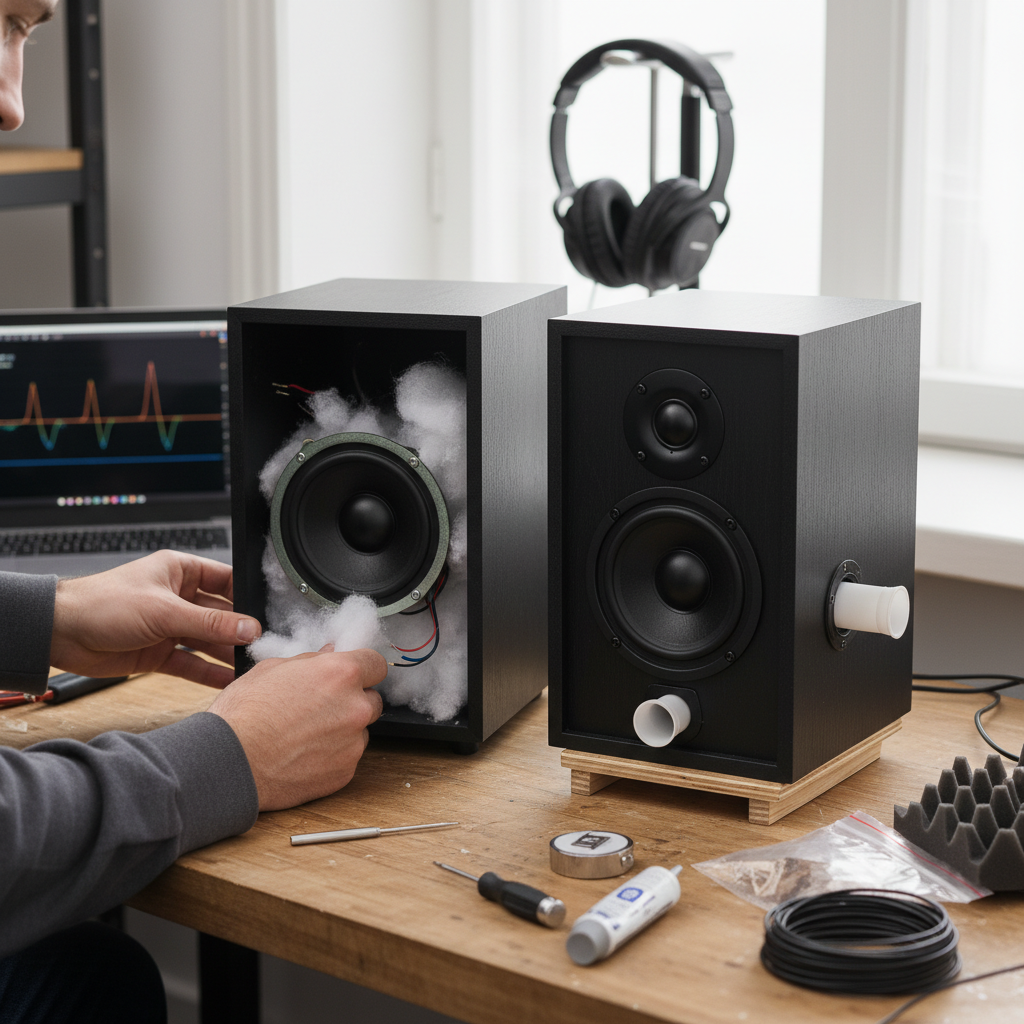
You can often improve the bass of cheap speakers by making minor modifications to their existing cabinets. Start by checking for any air leaks, particularly around the driver mounting points or seams, which can significantly degrade bass performance. Use acoustic sealant or even hot glue to seal any gaps. Additionally, adding internal damping material, such as acoustic foam, polyester fiberfill, or even old towels, can absorb unwanted internal reflections and vibrations, leading to tighter, more defined bass. Experiment with the amount of fill; too much can sometimes reduce bass, while too little allows for resonant peaks.
Building New Enclosures (More Advanced)
For the adventurous DIY enthusiast, constructing a new, larger enclosure can dramatically improve bass. Larger sealed boxes generally offer deeper, more controlled bass by providing the driver with more air volume to work with. Alternatively, a ported or vented enclosure, which features a precisely tuned port, can extend the bass response even further by allowing air to move in and out, augmenting the sound produced by the driver. However, designing ported enclosures requires careful calculations based on the speaker driver’s Thiele-Small parameters to avoid boomy or uncontrolled bass. More complex designs like horn-loaded or transmission line enclosures exist, but these demand significant expertise and precision.
Advanced Driver & Component Tweaks
Beyond placement and equalization, some more intricate DIY modifications can impact your speaker’s bass performance, though they come with higher risks and require careful execution.
Driver Break-in
New speaker drivers, particularly woofers, often benefit from a “break-in” period. This involves playing low-frequency audio through them for an extended duration, typically several hours at moderate volumes. This process helps to loosen the driver’s suspension, allowing it to move more freely and achieve its full bass potential. Think of it like breaking in a new pair of shoes; the materials become more flexible over time.
“A common misconception is that speaker drivers perform optimally right out of the box. A proper break-in period, often overlooked, allows the cone’s suspension to reach its intended compliance, unlocking deeper and more accurate bass response.” – Dr. Elena Petrova, Audio Engineering Specialist
Adding Mass to Speaker Cones
A more advanced technique involves carefully adding a small amount of mass to the speaker cone. This modification lowers the driver’s resonant frequency (Fs), enabling it to play lower bass notes. However, adding mass also makes the driver harder to move, requiring more amplifier power to achieve the same volume output. Crucially, this can also reduce the speaker’s maximum excursion (Xmax) and potentially lead to distortion or damage if the driver isn’t designed for it. This modification should only be attempted by experienced individuals who understand speaker mechanics and are prepared for potential trade-offs.
Crossover/Capacitor Modifications
The crossover network inside a speaker directs specific frequency ranges to the appropriate drivers (woofer, tweeter). In cheap speakers, crossovers are often basic. Modifying the crossover, such as changing the capacitor values for the woofer, can alter its low-pass frequency, theoretically allowing it to play lower. For instance, increasing the capacitance (e.g., from 1000uF to 2200uF) can lower the crossover point, letting more bass through. However, incorrect changes can negatively impact the overall sound balance, potentially bleeding mid-range frequencies into the woofer or causing phase issues. This modification is complex, requires soldering skills, and carries a significant risk of damaging components if not done correctly.
When to Consider a Subwoofer: The Ultimate Bass Upgrade
While DIY methods can certainly improve the bass of your cheap speakers, there are inherent physical limitations to how much low-end a small, full-range driver can produce. For truly profound, earth-shaking bass, a dedicated subwoofer is often the most effective and impactful upgrade.
A subwoofer is specifically designed to reproduce only the lowest frequencies, relieving your main speakers of this demanding task. Even an entry-level or used subwoofer can make a night-and-day difference in the perceived depth and power of your audio system, seamlessly integrating with your existing speakers to create a full-range sound. If your DIY efforts reach their limits and you still crave more bass, investing in a subwoofer provides a significant leap in performance that passive modifications often cannot match.
Practical Tips for Safe DIY Bass Boosting
When attempting any DIY modifications to your speakers, safety and caution are paramount. Always follow these guidelines to protect your equipment and ensure a positive outcome:
- Start Small: Begin with the least invasive changes, like placement adjustments or EQ settings, before moving on to physical modifications.
- Listen Critically: Pay close attention to the sound quality after each modification. Listen for distortion, unwanted resonances, or a reduction in clarity in other frequency ranges.
- Avoid Over-driving: Cheap speakers have power limitations. Pushing them too hard, especially with boosted bass, can quickly lead to blown drivers or amplifier damage.
- Research Thoroughly: Before attempting any internal modifications, research the specific components of your speaker and understand the potential impact of your changes.
- Test Incrementally: Make one change at a time and test it extensively before moving on to the next. This helps you isolate the effect of each modification.
Conclusion
Transforming the bass performance of cheap speakers through DIY methods is a rewarding journey that combines acoustics, electronics, and creative problem-solving. By strategically optimizing speaker placement, utilizing effective equalization, and carefully considering enclosure enhancements or driver tweaks, you can significantly deepen your audio experience without a major financial outlay. Remember that every speaker has its physical limits, and sometimes the ultimate bass upgrade lies in a dedicated subwoofer. Nonetheless, the satisfaction of coaxing richer, more resonant lows from humble speakers is an unparalleled achievement for any audio enthusiast. What DIY bass-boosting technique will you try first to unlock your speakers’ hidden potential?
Frequently Asked Questions
Can adding weight to a speaker cone truly increase bass?
Yes, adding a small, precisely measured amount of weight to a speaker cone can lower its resonant frequency, allowing it to produce deeper bass notes. However, this also reduces sensitivity, requiring more amplifier power, and risks driver damage if not done carefully or if the speaker’s design isn’t suitable.
Is it safe to use a software equalizer to boost bass?
Using a software equalizer is generally safe, provided you avoid excessively boosting frequencies, which can lead to audible distortion or clipping, especially at higher volumes. Start with modest boosts and listen for clarity to prevent damaging your speakers.
How much does speaker placement affect bass?
Speaker placement has a significant impact on bass perception. Positioning speakers near walls or in corners can exploit boundary gain, where reflected sound waves reinforce low frequencies, making the bass sound louder and deeper without any electronic adjustments.
What is speaker “break-in” and how do I do it?
Speaker break-in is the process of loosening a new speaker driver’s suspension through regular use. To do it, simply play music (especially tracks with varied frequencies) at moderate volumes for several hours or days, allowing the components to flex and settle, which often improves bass response.
Can modifying a speaker’s internal wiring or components boost bass?
While modifications like altering crossover capacitors can theoretically shift frequency response to favor bass, these are advanced DIY tasks. Incorrect component choices or wiring can degrade overall sound quality, introduce distortion, or even permanently damage your speaker.