Imagine music filling every corner of your room, wrapping you in sound no matter where you stand. This isn’t a futuristic dream; it’s the promise of 360-degree sound speakers, a category rapidly evolving to deliver an unparalleled auditory experience. For music lovers, party hosts, and anyone seeking a truly immersive listening environment, these speakers are transforming how we interact with audio. This comprehensive guide will explore the best 360-degree sound speakers available in 2026, helping you navigate the market to find the perfect device that brings your sound to life from every angle.
What Are 360-Degree Sound Speakers?
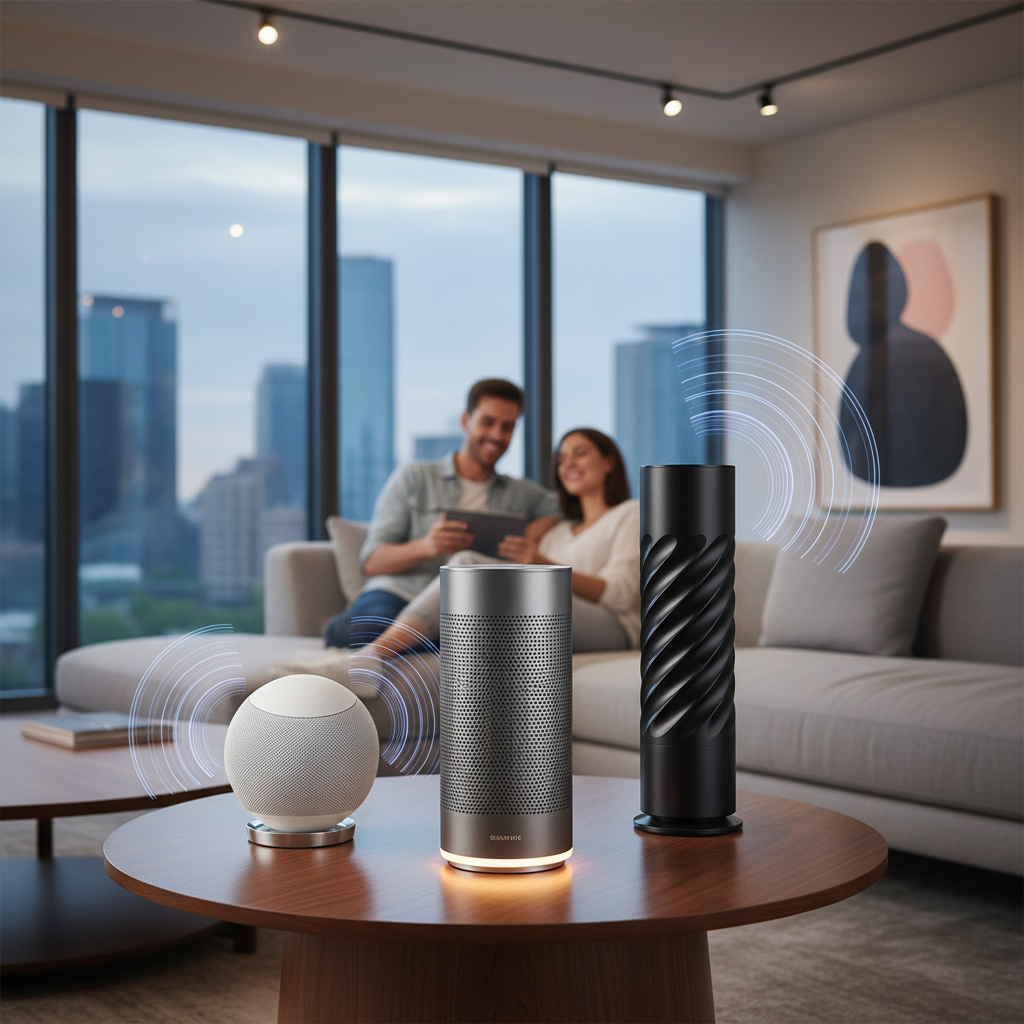
A 360-degree sound speaker is engineered to project audio uniformly in all directions, creating an immersive, room-filling soundscape. Unlike traditional directional speakers, which focus sound primarily forward, these devices ensure a consistent listening experience regardless of your position relative to the speaker. They mimic how we naturally perceive sound in the real world, where audio cues come from all around us.
The technology behind 360-degree sound speakers often involves a combination of hardware and sophisticated digital processing. Many models utilize multiple drivers, sometimes including upward-firing components or drivers arranged in a circular pattern, to disperse sound horizontally and vertically. Advanced algorithms then adjust the timing, frequency, and volume of these sounds to create a breathtaking illusion of a three-dimensional space. Brands like Sony leverage “object-based spatial audio” (360 Reality Audio), where individual sounds are precisely placed within a spherical sound field, giving artists new creative avenues for their music. Similarly, JBL employs its “360-Degree Pro Sound” to deliver dynamic audio from every direction. This innovative design marks a significant evolution from the limitations of traditional stereo, offering a more inclusive and natural listening environment.
Why Choose 360-Degree Sound? Benefits and Use Cases
The primary appeal of 360-degree sound speakers lies in their ability to deliver a truly immersive audio experience. This design ensures that the sound quality remains consistent throughout a space, eliminating the “sweet spot” typically associated with directional speakers. Whether you’re moving around a room, hosting a gathering, or simply relaxing on your couch, everyone enjoys rich, clear audio.
These speakers excel in various use cases. For parties, a 360-degree speaker can be placed centrally to provide even sound distribution, ensuring that music reaches all guests without needing multiple speakers or facing a specific direction. In multi-room audio setups, they fill larger spaces more effectively, allowing you to enjoy a unified sound experience throughout your home. Beyond music, the enhanced realism offered by spatial audio technologies can significantly boost immersion for gaming or movies, making you feel truly part of the action. Their inherent portability also makes them ideal for outdoor adventures, picnics, or poolside lounging, where dispersing sound broadly is often desired.
Types of 360-Degree Sound Speakers
The market for 360-degree sound speakers is diverse, encompassing various forms tailored to different needs and environments.
Portable Bluetooth Speakers: This is the most common category, featuring compact, battery-powered devices designed for on-the-go use. They are often rugged, water-resistant, and ideal for outdoor activities or moving between rooms. Many popular brands like JBL, UE, and Anker offer models in this segment.
Smart Speakers: Integrating voice assistants like Google Assistant or Amazon Alexa, these speakers combine 360-degree audio with smart home functionality. They are typically Wi-Fi enabled, allowing for high-quality streaming and hands-free control, making them perfect for kitchens or living rooms. Sony’s RA series are prime examples in this category.
Home Audio Systems (Soundbars/Multi-Room): While our focus is on more portable options, it’s worth noting that some high-end soundbars and multi-room audio systems incorporate 360-degree or spatial audio technologies. These are designed to create a comprehensive immersive experience within a dedicated home entertainment space.
Specific technologies differentiate brands. Sony’s 360 Reality Audio focuses on object-based sound, mapping individual sound elements in a spherical field. JBL’s 360-Degree Pro Sound aims for powerful, dynamic audio dispersal. Understanding these distinctions can help you choose a speaker that aligns with your preferred sound profile.
Factors to Consider When Buying a 360-Degree Speaker
Selecting the best 360-degree sound speaker involves weighing several key features to match your listening habits and lifestyle.
Sound Quality
|
Our Picks for the Best Bluetooth speaker in 2026
As an Amazon Associate I earn from qualifying purchases.
|
||
| Num | Product | Action |
|---|---|---|
| 1 | Soundcore Boom 2 By Anker, Outdoor Speaker, 80W, Subwoofer, BassUp 2.0, 24H Playtime, IPX7 Waterproof, Floatable, RGB Lights, USB-C, Custom EQ, Bluetooth 5.3, Portable for Camping and Beach - Black |

|
| 2 | JBL Charge 6 - Portable Waterproof & Drop-Proof Bluetooth Speaker, Bold JBL Pro Sound with AI Sound Boost, 28Hrs of Playtime, Built-in powerbank & Comes with a Sturdy/Removable Carrying Strap (Black) |
|
| 3 | JBL Go 3 - Portable Mini Bluetooth Speaker, big audio and punchy bass, IP67 waterproof and dustproof, 5 hours of playtime, speaker for home, outdoor and travel (Black) |
|
| 4 | BolaButty Bluetooth Speaker with HD Sound, Portable Wireless, IPX5 Waterproof, Up to 20H Playtime, TWS Pairing, BT5.3, for Home/Party/Outdoor/Beach, Electronic Gadgets, Birthday Gift (Black) |
|
| 5 | JBL FLIP 5, Waterproof Portable Bluetooth Speaker, Black, Small |
|
| 6 | Monster S620 Bluetooth Speaker, Wireless Portable Outdoor Bluetooth Speakers, 60W True Wireless Stereo IPX8 Waterproof, Dual PairingBluetooth 5.4 Built-in Mic, Perfect for Home, Blue |
|
| 7 | Portable Bluetooth Speaker, IPX7 Waterproof Wireless Speaker with 20W Loud Stereo Sound, 15H Playtime & Beat-Synced RGB Light, Small Outdoor Speaker for Shower, Pool, Beach, Hiking and Gifts |
|
| 8 | Bose SoundLink Flex Bluetooth Speaker (2nd Gen) - Portable Outdoor Speaker with Hi-Fi Audio, Waterproof and Dustproof, USB-C, Up to 12 Hours Battery Life, Twilight Blue - Limited Edition Color |
|
| 9 | JBL Go 4 - Ultra-Portable, Waterproof and Dustproof Bluetooth Speaker, Big JBL Pro Sound with Punchy bass, 7-Hour Built-in Battery, Made in Part with Recycled Materials (Blue) |
|
| 10 | Anker Soundcore 2 Portable Bluetooth Speaker, 12W Stereo Sound with Deep Bass, IPX7 Waterproof, 24-Hour Playtime, Built-in Mic, for Home, Outdoors & Travel |
|
Despite their omnidirectional design, sound quality remains paramount. Look for models that offer a balanced audio profile with clear highs (treble), well-defined mids, and a robust, deep bass. Pay attention to the maximum volume output and ensure there’s minimal distortion, even at higher levels. While 360-degree sound aims for even dispersal, some models might slightly dilute overall sound clarity compared to highly directional, audiophile-grade speakers. Therefore, reading reviews that specifically address the sound profile is crucial.
Battery Life
For portable 360-degree speakers, battery life is a critical factor. Most quality models offer between 8 to 20+ hours of playtime on a single charge, providing ample power for extended listening sessions outdoors or throughout your home. Consider the charging time as well, ensuring it’s convenient for your usage patterns.
Connectivity
Modern 360-degree speakers offer a range of connectivity options. Bluetooth is standard, so check for the latest version (e.g., Bluetooth 5.0 or higher) for stable connections, improved range, and energy efficiency. Wi-Fi connectivity is vital for smart speakers and allows for higher-fidelity audio streaming and multi-room functionality. Additional ports like AUX (3.5mm input) or USB can expand versatility, allowing you to connect non-Bluetooth devices or even charge your smartphone.
Durability and Water Resistance
If you plan to use your speaker outdoors or near water, durability and water resistance are essential. Look for an IP (Ingress Protection) rating, which indicates resistance to dust and water. An IPX4 rating offers splash resistance, while IP67 signifies full dustproof and waterproof capabilities, making the speaker submersible. Robust build materials also contribute to longevity.
Smart Features
Many 360-degree speakers integrate smart functionalities. Voice assistants like Google Assistant or Amazon Alexa allow for hands-free control of music playback, smart home devices, and information retrieval. Features like multi-room music support and compatibility with streaming services (Spotify, YouTube Music, Apple Music) enhance the user experience.
Portability and Design
The physical attributes of the speaker matter, especially for portable models. Consider its size and weight – is it light enough to carry easily, or is it better suited for stationary use? Features like integrated handles or shoulder straps can significantly improve portability. Design also plays a role, with many speakers offering sleek aesthetics and various color options to complement your style.
Stereo Pairing
Some 360-degree speakers offer True Wireless Stereo (TWS) pairing, allowing you to connect two identical speakers wirelessly to create a wider, more dynamic stereo soundstage. This feature can significantly enhance the immersive experience, especially in larger rooms or outdoor spaces.
Top 360-Degree Sound Speakers for 2026
The market in 2026 boasts an impressive array of 360-degree sound speakers, each offering unique strengths. Here are some of the top contenders:
Anker Soundcore Motion X600
The Anker Soundcore Motion X600 stands out for its excellent sound quality at a competitive price. It features a five-driver system, including an upward-firing driver, which contributes to its immersive sound. The spatial audio mode adds noticeable depth, making it a great choice for budget-conscious audiophiles. It balances robust audio with portability, though it’s not the most compact.
- Pros: Immersive spatial audio, good sound quality, upward-firing driver, affordable.
- Cons: Not the most portable, controls can be less intuitive.
- Ideal for: Audio enthusiasts on a budget, indoor/outdoor use where sound quality is a priority.
UE Wonderboom 4
Known for its ruggedness and compact design, the UE Wonderboom 4 is a fantastic option for outdoor adventures and shower singing. Its “360-degree sound” genuinely helps spread music evenly in small to medium spaces, complemented by its natural reflections in tiled environments. It’s fully waterproof and offers good battery life.
- Pros: Highly portable, fully waterproof (IP67), good 360-degree sound for its size, durable.
- Cons: Bass might not be as deep as larger speakers, sound profile is less refined for critical listening.
- Ideal for: Shower, pool, beach, and general outdoor use.
JBL Link Music / Link Portable
JBL’s Link series, featuring 360-Degree Pro Sound, delivers bold and dynamic audio. The Link Music is a compact smart speaker with Google Assistant, perfect for home use, providing crystal clear highs, sharp mids, and deep bass in every direction. The Link Portable offers similar features with the added benefit of an internal battery for on-the-go listening. Both offer seamless Wi-Fi and Bluetooth streaming.
- Pros: Powerful JBL 360-Degree Pro Sound, integrated Google Assistant, Wi-Fi/Bluetooth streaming, stylish design.
- Cons: Link Music requires a power outlet (not portable), Link Portable battery life could be longer.
- Ideal for: Smart home integration, kitchen/living room ambiance, portable listening with voice control.
Sony SRS-RA5000 / SRS-RA3000
These speakers are built around Sony’s innovative 360 Reality Audio technology, which places individual sound sources in a spherical sound field for a truly immersive experience. They offer ambient room-filling sound and can upscale stereo tracks using “Immersive Audio Enhancement.” Both are Wi-Fi enabled, support Google Assistant and Alexa, and can be part of a multi-room setup. The RA5000 is the premium option with Hi-Res audio compatibility.
- Pros: True object-based 360 Reality Audio, ambient room-filling sound, Wi-Fi/Bluetooth, smart assistant integration, Immersive Audio Enhancement.
- Cons: Requires compatible streaming services for full 360 Reality Audio, higher price point.
- Ideal for: Audiophiles seeking advanced spatial audio, home use with smart assistant integration.
Treblab HD-360 Pro
The Treblab HD-360 Pro is a robust, value-oriented speaker designed to deliver loud 360-degree sound with powerful bass. It features five drivers and eight passive radiators, enclosed in a durable metallic chassis. While it’s heavy and its touch controls can be finicky, its sound output and build quality for the price are notable.
- Pros: Loud volume, powerful bass, durable construction (metallic chassis), affordable for its output.
- Cons: Heavy (less portable), touch controls can be annoying, IPX4 (less water-resistant than some).
- Ideal for: Those prioritizing loud, bass-heavy 360-degree sound on a budget, less frequent portability.
Pricing of 360-Degree Sound Speakers
The cost of 360-degree sound speakers varies widely, catering to different budgets and feature requirements.
Entry-Level (Under $100 USD): This segment includes smaller, more basic portable Bluetooth speakers that offer a decent 360-degree effect. They often focus on durability and basic functionality. The UE Wonderboom 4 often falls into this category, offering excellent value.
Mid-Range ($100 – $300 USD): This is where you’ll find a wide selection of portable and smart speakers that strike a balance between sound quality, features, and price. Models like the Anker Soundcore Motion X600, JBL Link Portable, and Treblab HD-360 Pro are typically found here, offering enhanced audio performance, better battery life, and more advanced connectivity options.
Premium (Above $300 USD): This category includes high-fidelity 360-degree smart speakers and more sophisticated home audio solutions. Devices like the Sony SRS-RA3000 and SRS-RA5000 reside here, offering advanced spatial audio technologies, superior build quality, and comprehensive smart home integration.
It’s important to consider that investing in a speaker isn’t just about the initial cost, but also the long-term enjoyment and how well it meets your specific audio needs.
Conclusion
Choosing the best 360-degree sound speaker in 2026 means stepping into a world where music truly surrounds you. From the budget-friendly Anker Soundcore Motion X600 to Sony’s advanced 360 Reality Audio speakers, there’s an immersive audio solution for every listener. By carefully considering factors like sound quality, battery life, durability, smart features, and your intended use, you can find a speaker that transforms your everyday listening into an extraordinary experience. Embrace the evolution of audio and let your music fill the space around you. Which 360-degree sound speaker will become the centerpiece of your audio world?
Frequently Asked Questions
How does 360-degree sound compare to traditional stereo sound?
360-degree sound aims to project audio evenly in all directions, creating a consistent listening experience for everyone in a room. Traditional stereo focuses sound from two channels, creating a “sweet spot” where the soundstage is best, but this can diminish when moving away from that optimal position.
Are 360-degree speakers good for outdoor use?
Yes, many 360-degree speakers are excellent for outdoor use because they distribute sound broadly, making them ideal for parties or gatherings where listeners are scattered. Look for models with high IP ratings for water and dust resistance to ensure durability in outdoor environments.
Do all 360-degree speakers have smart assistant features?
No, not all 360-degree speakers include smart assistant integration. Many portable Bluetooth models focus solely on audio playback. Smart speakers typically feature Wi-Fi connectivity and built-in voice assistants like Google Assistant or Amazon Alexa for hands-free control and smart home capabilities.
Can I pair two 360-degree speakers for an even better experience?
Many 360-degree speakers support True Wireless Stereo (TWS) pairing, allowing you to connect two identical speakers wirelessly. This setup often creates a more expansive and robust stereo soundstage, enhancing the immersive qualities beyond what a single speaker can achieve.
Is “spatial audio” the same as “360-degree sound”?
While often used interchangeably, “spatial audio” is a broader term encompassing technologies that create a three-dimensional soundscape, including height and depth. 360-degree sound specifically refers to the omnidirectional projection of audio. Many spatial audio technologies achieve their effect through 360-degree sound delivery.