Are you tired of the underwhelming sound from your laptop’s built-in speakers? Connecting external speakers to your Windows 11 laptop can dramatically improve your audio experience, whether you’re gaming, watching movies, or listening to music. This comprehensive guide will walk you through both wired and wireless connection methods, delve into optimizing your sound settings, and provide practical troubleshooting tips, ensuring you can enjoy rich, clear audio with ease.
Understanding Speaker Connection Types for Laptops
Before diving into the “how-to,” it’s helpful to understand the common ways speakers connect to a laptop. Each method offers distinct advantages in terms of sound quality, portability, and ease of use.
Wired Connections: The Reliable Go-To
|
Our Picks for the Best Bluetooth speaker in 2026
As an Amazon Associate I earn from qualifying purchases.
|
||
| Num | Product | Action |
|---|---|---|
| 1 | JBL FLIP 5, Waterproof Portable Bluetooth Speaker, Black, Small |

|
| 2 | Anker Soundcore 2 Portable Bluetooth Speaker, 12W Stereo Sound with Deep Bass, IPX7 Waterproof, 24-Hour Playtime, Built-in Mic, for Home, Outdoors & Travel |
|
| 3 | BolaButty Bluetooth Speaker with HD Sound, Portable Wireless, IPX5 Waterproof, Up to 20H Playtime, TWS Pairing, BT5.3, for Home/Party/Outdoor/Beach, Electronic Gadgets, Birthday Gift (Black) |
|
| 4 | JBL Go 3 - Portable Mini Bluetooth Speaker, big audio and punchy bass, IP67 waterproof and dustproof, 5 hours of playtime, speaker for home, outdoor and travel (Black) |
|
| 5 | JBL Charge 6 - Portable Waterproof & Drop-Proof Bluetooth Speaker, Bold JBL Pro Sound with AI Sound Boost, 28Hrs of Playtime, Built-in powerbank & Comes with a Sturdy/Removable Carrying Strap (Black) |
|
| 6 | JBL Go 4 - Ultra-Portable, Waterproof and Dustproof Bluetooth Speaker, Big JBL Pro Sound with Punchy bass, 7-Hour Built-in Battery, Made in Part with Recycled Materials (Blue) |
|
| 7 | Monster S620 Bluetooth Speaker, Wireless Portable Outdoor Bluetooth Speakers, 60W True Wireless Stereo IPX8 Waterproof, Dual PairingBluetooth 5.4 Built-in Mic, Perfect for Home, Blue |
|
| 8 | Portable Bluetooth Speaker, IPX7 Waterproof Wireless Speaker with 20W Loud Stereo Sound, 15H Playtime & Beat-Synced RGB Light, Small Outdoor Speaker for Shower, Pool, Beach, Hiking and Gifts |
|
| 9 | Bose SoundLink Flex Bluetooth Speaker (2nd Gen) - Portable Outdoor Speaker with Hi-Fi Audio, Waterproof and Dustproof, USB-C, Up to 12 Hours Battery Life, Twilight Blue - Limited Edition Color |
|
| 10 | Soundcore Boom 2 By Anker, Outdoor Speaker, 80W, Subwoofer, BassUp 2.0, 24H Playtime, IPX7 Waterproof, Floatable, RGB Lights, USB-C, Custom EQ, Bluetooth 5.3, Portable for Camping and Beach - Black |
|
Wired connections offer consistent audio quality without the concern of battery life or wireless interference, making them a solid choice for stationary setups.
3.5mm Audio Jack (Auxiliary)
This is the most common and simplest method for connecting many types of speakers. Your laptop likely has a small, circular port (often green or with a headphone icon) designed for a 3.5mm jack.
- What it is: A universal analog audio connector.
- How to identify: Look for a small, circular port on your laptop, typically marked with a headphone or speaker icon.
- Pros: Simplicity, plug-and-play functionality, no latency, nearly universal compatibility with passive and powered speakers.
- Cons: Requires a physical cable, limiting speaker placement and potentially contributing to cable clutter.
USB Connection
Some modern speakers, especially computer speakers, utilize a USB connection for digital audio transmission and sometimes even power.
- Types of USB speakers: These can connect via standard USB-A ports or the newer, more versatile USB-C ports.
- Pros: Delivers digital audio for potentially higher fidelity, can power the speaker directly from the laptop, and may offer additional features or better sound processing for certain speaker models.
- Cons: Occupies a valuable USB port, may require specific drivers for some advanced speakers, and still involves a cable.
Wireless Connections: Freedom of Sound
Wireless options provide flexibility and a clutter-free setup, perfect for portable speakers and those who value mobility.
Bluetooth Connection
Bluetooth is the most prevalent wireless technology for connecting external speakers to laptops. It uses short-range radio waves to create a wireless link between your devices.
- How it works: Your laptop’s Bluetooth adapter sends audio signals to the speaker, which decodes and plays the sound.
- Pros: Wireless freedom, clean aesthetic without cables, easy to set up once paired.
- Cons: Can sometimes experience latency (audio delay), relies on speaker battery life, and has a limited operating range (typically up to 30 feet).
Wi-Fi/Casting (Advanced)
While less common for direct speaker-to-laptop connections, some home audio systems and smart speakers (like those from Sonos or with Chromecast built-in) can connect over Wi-Fi. This offers a wider range and often higher audio quality than Bluetooth, but typically requires a network setup rather than a direct peer-to-peer connection. This method is generally reserved for multi-room audio or dedicated streaming solutions.
Step-by-Step Guide: Connecting Your Speaker to Windows 11
Connecting your speaker to a Windows 11 laptop is a straightforward process, regardless of whether you choose a wired or wireless method.
Method 1: Connecting a Bluetooth Speaker
This method offers the most flexibility, allowing you to place your speaker where it sounds best without cable constraints.
-
Prepare Your Bluetooth Speaker:
- Power On: Ensure your Bluetooth speaker is turned on and has sufficient battery life.
- Activate Pairing Mode: Most Bluetooth speakers have a dedicated Bluetooth button or a power button that, when held, puts the speaker into a “pairing” or “discovery” mode. The indicator light will usually flash or change color to confirm this. Refer to your speaker’s manual for specific instructions.
-
Access Bluetooth Settings on Windows 11:
- Click the Start button (Windows icon) on your taskbar.
- Select Settings (gear icon).
- In the Settings window, navigate to Bluetooth & devices in the left-hand menu.
- Ensure the Bluetooth toggle at the top is set to “On.” If it’s off, click it to enable Bluetooth.
-
Add a New Device:
- Click the “Add device” button (usually a plus sign) at the top of the “Bluetooth & devices” section.
- In the “Add a device” pop-up window, select “Bluetooth” as the device type you want to add.
-
Select and Pair Your Speaker:
- Windows 11 will begin searching for nearby Bluetooth devices. Your speaker’s name should appear in the list (e.g., “JBL Flip 5,” “Sony Speaker”).
- Click on your speaker’s name to initiate the pairing process.
- Windows 11 may ask for a PIN (usually 0000 or 1234, if required by your speaker). Most modern speakers don’t require one.
- Once connected, the status under your speaker’s name will change to “Connected” or “Paired.”
-
Confirm Connection and Test Audio:
- Play some audio (music, video) on your laptop.
- If sound doesn’t immediately come through the speaker, right-click the speaker icon in your taskbar, then select “Sound settings.” Under “Output,” choose your newly connected Bluetooth speaker from the dropdown menu.
Method 2: Connecting a Wired Speaker (3.5mm Aux or USB)
Wired connections are often simpler and more reliable, requiring fewer steps.
-
Identify Available Ports:
- For 3.5mm Aux speakers: Locate the 3.5mm audio jack on your laptop. This is usually on the side and may be marked with a headphone or speaker icon.
- For USB speakers: Identify an available USB-A or USB-C port on your laptop.
-
Connect the Speaker’s Cable:
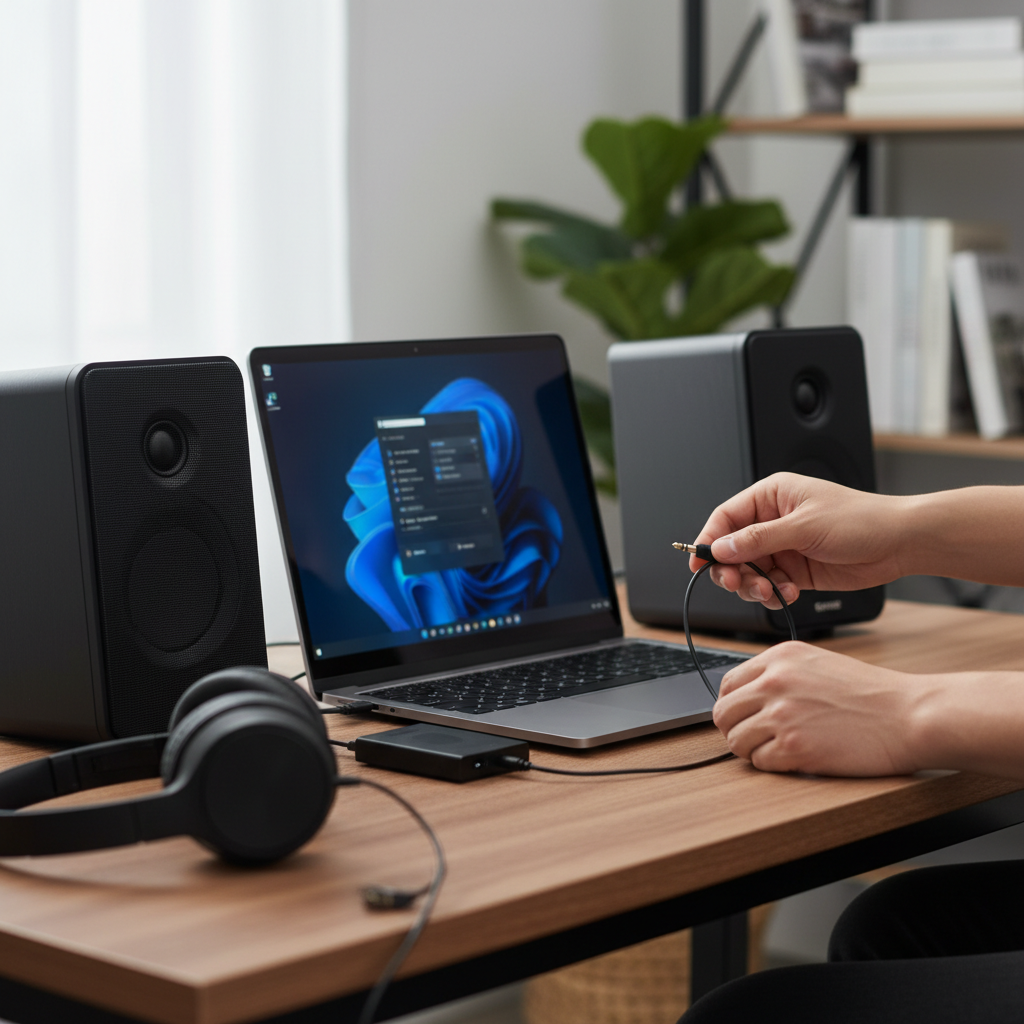
- For 3.5mm Aux: Plug one end of the 3.5mm audio cable into your speaker and the other end into your laptop’s 3.5mm audio jack.
- For USB: Plug the USB cable from your speaker into an available USB port on your laptop.
-
Power On Your Speaker:
- Ensure your wired speaker is powered on. Many wired speakers require an external power source (wall adapter) in addition to the audio cable.
-
Select Audio Output (If Necessary):
- Windows 11 typically detects wired speakers automatically. However, if you don’t hear sound, right-click the speaker icon in your taskbar and select “Sound settings.”
- Under the “Output” section, ensure your wired speaker (it might be listed as “Speakers,” “Headphones,” or by its brand name) is selected as the default output device.
Optimizing Your Audio Experience on Windows 11
Once your speakers are connected, a few tweaks can ensure you’re getting the best possible sound.
Adjusting Sound Settings
Windows 11 provides granular control over your audio output.
- Output Device Selection: This is crucial if you switch between different audio devices. Right-click the speaker icon on your taskbar, select “Sound settings,” and use the “Output” dropdown menu to choose your desired speaker.
- Volume Levels: Control master volume using the taskbar slider. For application-specific volume, scroll down in the “Sound settings” to “Volume mixer” to adjust individual app levels.
- Spatial Sound: For supported audio devices and content, enabling spatial sound (like Windows Sonic or Dolby Atmos) can create a more immersive, three-dimensional audio experience. You can find this option in the “Sound settings” under your chosen output device’s properties.
Troubleshooting Common Connection Issues
Encountering problems? Here are solutions to frequent speaker connection issues.
-
Speaker Not Showing Up (Bluetooth):
- Ensure Pairing Mode: Double-check that your Bluetooth speaker is actively in pairing mode.
- Restart Devices: Sometimes, a simple restart of both your laptop and speaker can resolve connectivity glitches.
- Update Bluetooth Drivers: Go to Device Manager (search for it in the Start menu), expand “Bluetooth,” right-click your Bluetooth adapter, and select “Update driver.”
- Proximity: Make sure your speaker is within close range of your laptop.
-
No Sound After Connecting:
- Check Volume Levels: Verify that both your laptop’s master volume and the speaker’s physical volume knob/buttons are turned up.
- Verify Output Device: Confirm the correct speaker is selected as the audio output in Windows 11’s Sound settings.
- Test with Another Device: Try connecting your speaker to a different device (like a smartphone) to rule out an issue with the speaker itself.
- Check Mute Status: Ensure neither your laptop nor the speaker is accidentally muted.
-
Sound Quality Issues (Static, Distortion):
- Check for Interference (Bluetooth): Move away from other wireless devices or large metal objects that might be causing interference.
- Try Different Cables (Wired): A faulty 3.5mm or USB cable can cause distortion. Try swapping it out if possible.
- Update Audio Drivers: In Device Manager, expand “Sound, video and game controllers,” right-click your audio device, and update its driver.
Choosing the Right Speaker for Your Windows 11 Laptop
Selecting the perfect speaker depends on your lifestyle and priorities.
- Portability vs. Sound Quality: Compact Bluetooth speakers are great for on-the-go audio, but larger wired speakers or bookshelf systems will generally offer superior sound quality for a stationary setup.
- Budget Considerations: Speakers range from affordable portable options to high-end audiophile systems. Determine your budget to narrow down choices.
- Specific Features: Consider features like water resistance for outdoor use, smart assistant integration for convenience, or the ability to pair multiple speakers for a wider soundstage.
Conclusion: Elevate Your Windows 11 Audio
Connecting external speakers to your Windows 11 laptop is a simple yet impactful upgrade that can transform your daily computing experience. Whether you prefer the reliability of a wired connection or the freedom of wireless Bluetooth, Windows 11 provides intuitive tools to get you set up quickly. By understanding the different connection types, following the step-by-step guides, and utilizing troubleshooting tips, you can unlock a world of richer, more immersive sound. So, don’t settle for mediocre built-in audio – elevate your listening and truly enjoy your media.
What type of audio experience are you hoping to achieve with your new speakers?
Frequently Asked Questions
How do I troubleshoot if my Bluetooth speaker isn’t connecting to Windows 11?
If your Bluetooth speaker isn’t connecting, first ensure it’s in pairing mode and fully charged. Then, check your laptop’s Bluetooth settings to make sure Bluetooth is enabled and try restarting both devices. You might also want to update your laptop’s Bluetooth drivers via Device Manager to resolve potential software conflicts.
Can I connect multiple speakers to my Windows 11 laptop simultaneously?
Yes, Windows 11 allows you to connect multiple audio devices, but typically only one can be selected as the active output at a time for standard audio. However, some advanced Bluetooth speakers support “party mode” or stereo pairing, allowing two identical speakers to play simultaneously. Third-party software can also enable simultaneous playback to different devices.
What’s the difference between a 3.5mm and USB speaker connection?
A 3.5mm connection is an analog audio signal, simple and universal, but can be susceptible to interference. A USB connection transmits digital audio, which can offer better sound quality and often provides power to the speaker, but might require specific drivers. USB connections also occupy a data port on your laptop.
Why is my speaker sound distorted when connected to my laptop?
Sound distortion can stem from several issues. For Bluetooth, it might be due to interference, distance, or a weak signal. For wired connections, try a different cable, as a faulty one can cause static. Ensuring your audio drivers are up to date and that neither the laptop nor speaker volume is excessively high can also help.
Do I need special drivers to connect an external speaker to Windows 11?
Most standard 3.5mm auxiliary and basic USB speakers are plug-and-play and do not require special drivers; Windows 11 will use its generic audio drivers. For Bluetooth speakers, Windows 11’s built-in Bluetooth stack typically handles the connection. However, some high-end or specialized USB speakers might come with manufacturer-specific drivers to unlock their full features.